










Click here to subscribe FREE to Ray Hanania's Columns
Northwestern Medicine Palos Hospital Expands Specialized Emergency Care for Older Adults
The Geriatric Emergency Department Initiative aims to improve care and outcomes for patients 65 years and older
An initiative at Northwestern Medicine Palos Hospital is improving care and outcomes for older adults in the emergency department.
The Geriatric Emergency Department Initiative (GEDI) program is designed to deliver specialized, patient-centered support for individuals 65 years and older during and after their emergency department visit.
Senior citizens account for up to 20 percent of hospital emergency visits nationally, a number that is growing as the U.S. population ages.
More than 30 percent of these patients will be admitted to the hospital rather than discharged from the emergency department. For older adults, hospitalization comes with the increased risk of infection, falls, delirium, frailty and death. Geriatric-focused emergency department models have been shown to improve care coordination, reduce complications and support safer transitions home.
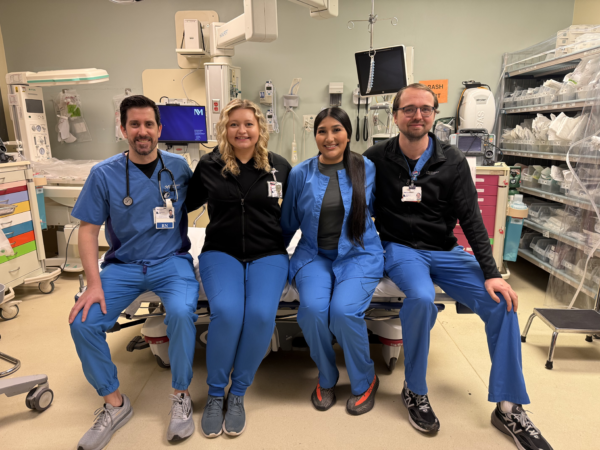
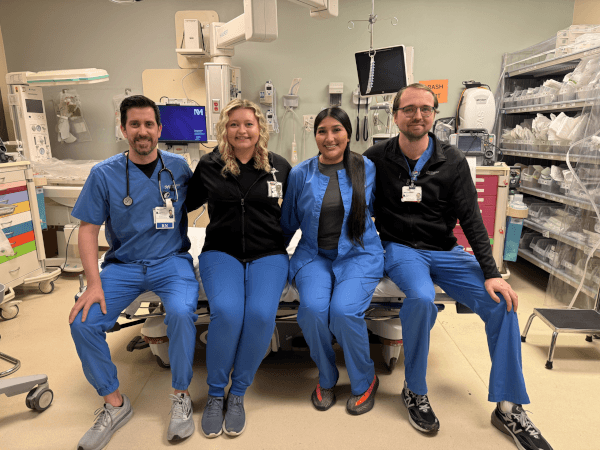
“Our hospital ranks among the top in the nation for the volume of emergency department visits by adults 65 years and older,” said Amanda Capuano, RN, emergency department nurse and GEDI program lead at Northwestern Medicine Palos Hospital. “There is a strong community need for geriatric-focused emergency care in the south suburbs. Since we launched the GEDI program, we have seen significant improvements in patient experience and outcomes for our older adult patients.”
Each GEDI team member received geriatric-specific education and training and use evidence-based tools such as fall-risk screening, medication reconciliation, and assessment of social and environmental needs when caring for older adults. Each patient interaction is tailored to support safety, independence, and long-term well-being.
Northwestern Medicine first introduced the GEDI program in 2013 at Northwestern Memorial Hospital. The hospital was among the first in the nation to earn Geriatric Emergency Department Accreditation (GEDA).
“The geriatric emergency department model is designed to meet the unique needs of older adults, who often arrive with multiple, overlapping medical and social concerns,” explained emergency medicine physician Scott Dresden, MD, who became the director of the GEDI program at Northwestern Memorial Hospital in 2013.
“Instead of focusing only on the immediate issue, such as a wrist injury after a fall, our multi-disciplinary GEDI team looks deeper to understand why that fall happened and how we can prevent the next one. At Northwestern Memorial, our GEDI model has significantly reduced hospitalizations, readmissions and Medicare costs for older adults.”
“Every older adult who walks through our doors has a story, a home environment, a support system and needs that go far beyond the immediate medical issue,” said Capuano.
“Our team sits with them, listens and helps build a plan that keeps them safer and more confident at home. We’ve seen the stress lift from families, and we’ve seen patients thrive because they know they’re supported even after they leave the emergency department.”
GEDI nurses continue supporting patients after discharge with customized resource packets for each community, follow-up phone calls and a daily check-in program for older adults living alone. The team also partners with local fire, police and EMS departments to identify seniors who may be at risk for self-neglect, medication mismanagement, or unsafe living conditions.
As part of the GEDI program, Palos Hospital piloted a “Go Bag” project to encourage older adults and their caregivers to assemble a small, personal emergency kit containing medications, emergency contacts and other key information that can inform care in the emergency room. The simple step can make a critical difference in time‑sensitive emergencies such as strokes, seizures and cardiac arrest. As the project continues, Capuano and the hospital’s GEDI team are working to educate area first responders to look for the Purple Go Bag when responding to calls in the community.
“Our firefighters are in people’s homes every day, and the GEDI team has given us new tools to spot red flags, things like empty refrigerators, unsafe temperatures, and medical concerns that might otherwise go unnoticed,” said Ben Knights, Palos Fire Protection District, working with the program. “Having a direct line to the GEDI nurses means we can connect seniors to help fast. It’s truly saving lives in this community.”
Northwestern Medicine Palos Hospital is exploring opportunities to expand GEDI’s reach across the region, including additional partnerships with senior centers, libraries, community groups and veterans service organizations.
“Our community partners have been very responsive to these efforts and share Northwestern Medicine’s commitment to ensuring our seniors get the support they need before, during and after an emergency visit,” said Capuano. “Together, we’re building a stronger network of care for older adults. It has been a true community effort.”
Northwestern Medicine aims for all emergency departments in the health system to implement geriatric emergency programs, expanding access to this specialized care to more older adults across the Chicagoland region.
To learn more about Northwestern Medicine, visit https://news.nm.org/.
Click here to subscribe FREE to Ray Hanania's Columns

His award winning columns can be found at www.HANANIA.COM Subscribe FREE today
Hanania also writes about Middle East issues for the Arab News, and The Arab Daily News criticizing government policies in the Israeli-Palestinian conflict.
Hanania was named "Best Ethnic American Columnist" by the New America Media in November 2007, and is the 2009 recipient of the SPJ National Sigma Delta Chi Award for column writing.
Email Ray Hanania at [email protected].
Follow RayHanania at Twitter
- Offender charged in attempted Armed Robbery in Orland Park gas station assault - September 16, 2026
- Northfield Township Road District Approves 4.6% Levy Reduction, First Tax Cut in Three Decades - September 15, 2026
- Chicagoland pastors reiterate call to release religious leader detained in South Korea - September 15, 2026