







Click here to subscribe FREE to Ray Hanania's Columns
Religious rights scholars urge release of 95-year-old Shincheonji Chairman Lee Man-Hee from South Korean pre-trial detention
Leaders of Human Rights Without Borders and other rights group leaders will hold a press conference this week in Hazelcrest to address the concerns about discrimination and oppression against certain religious organizations such as that of Shincheonji.
By Ray Hanania
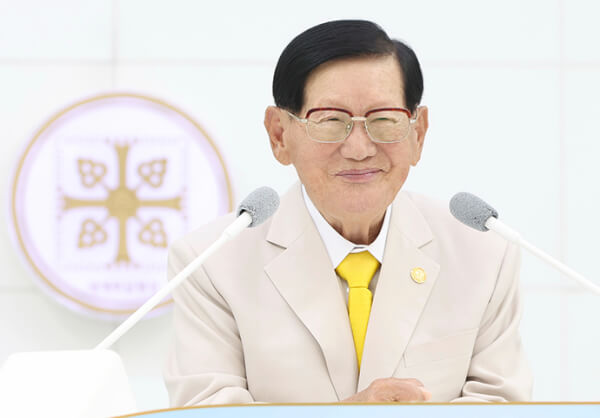
Orland Park, IL – Religious rights scholars urged the release of 95 year old Lee ManHee, chairman of Shincheonji, a religious movement, during an online press conference held in Seoul, South Korea Friday, August 7, 2026.
Human rights experts from Europe and Asia held a press conference in Seoul, South Korea, on Friday, August 7th, to raise concerns over religious freedom, including concerns for several leaders of religious group. They called on the mainstream news media to report on the challenges religious leaders face in South Korea.
HRWF Associate Director Hans Noot was joined by human rights scholars including CAP Liberté de Conscience (CAPLC) President Thierry Valle, FOREF Germany Executive Director Michael Langhans, CESNUR Managing Director and Editor-in-Chief of “Bitter Winter” Massimo Introvigne, and CESNUR Deputy Director Mark Nemes.
“Chairman Lee is 95 years old. In the European Union, from which we come, pre-trial detention for older defendants is considered an exceptional measure, permitted only when violent crimes are alleged—which is not the case here,” a statement read by Noot argued. In comparable situations, defendants are placed under house arrest, he said.
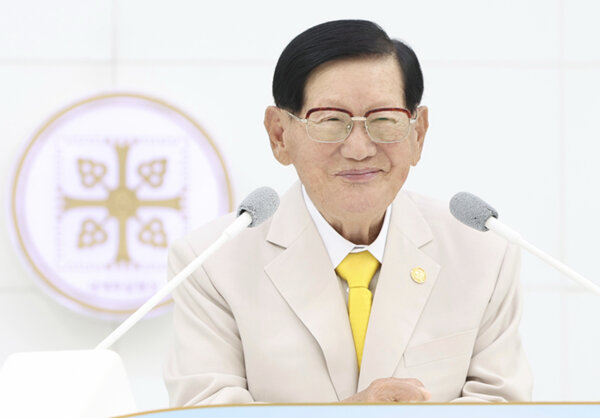
“This approach is consistent with the Mandela Rules and other United Nations standards. For humanitarian reasons, and in accordance with international principles protecting older defendants, we respectfully request the immediate release of Chairman Lee from custody, so that he may stand trial without being held in detention.”
Broadcast online from the Seoul Foreign Correspondents Club (SFCC), and attended by international journalists from around the world, the press briefing was hosted by Human Rights Without Frontiers (HRWF) along with CAP Liberté de Conscience (CAP LC), which has accredited ECOSOC status at the United Nations, FOREF, CESNUR and Bitter Winter, the scholars also urged the mainstream news media to address the human rights concerns.
The group called on South Korean authorities to review Lee’s detention and to ensure that the legal and administrative response to religious minorities remains “neutral, proportionate, and consistent” with South Korea’s international human-rights obligations.
Concerns have also persisted regarding Segero Church in Busan, which has reportedly continued to face harassment and official scrutiny even after Pastor Son Hyun-bo was released from detention, and for 83-year-old Mrs. Hak-ja Han Moon of the Family Federation.
“As a state party to the International Covenant on Civil and Political Rights, Korea is bound to ensure that any restriction on fundamental rights is prescribed by law, necessary, and proportionate,” Valle said, noting CAPLC filed a new statement on Lee’s detention.
“That document records a joint police prosecutor task force created in December 2025 that has summoned more than sixty individuals, reopened closed cases, and disproportionate COVID-19 closures that caused over 5.8 billion Korean won in losses. The last-minute cancellation of the Incheon Park event has documented cases of coercive deconversion, including one death in 2025.
Nemes expressed concerns that the crackdown on religious freedom cases was decided before many of the human rights cases can be fully adjudicated in the Korean courts, citing the Minister of Justice Sang-ho Jung who stated on Facebook recently that “criminal punishment is inevitable” in the Lee case.
“We were quite surprised by these comments and even more perplexed by the religious fervor of this supposedly secular state minister. Allow me to read a brief quotation of this Facebook post. He states, ‘Today, Lee Man-hee, chairman of Shincheonji, who is accused of forcibly registering more than fifty thousand believers as members of a specific political party, was indicted and detained. The allegation is that through mass party enrollment during major political events such as presidential, local, and party leadership elections, he distorted the political will of parties and citizens and violated the constitutional principle of separation of religion and state’.” Nemes said, also noting the prosecution of the Unification Church.
“Mr. Jung’s unique understanding of how this separation works is quite perplexing once again. In his eyes, religions are not allowed to comment on broader social matters at all. Scholars of religion, however, just like myself, would argue that subjects that concern broader society have always been discussed within religious contexts as well, as the ethical and moral standpoints that citizens themselves take originate from and are upheld by the structures of these very spheres.”
Nemes said that Lee and the Unification Church were not alone in being “persecuted for political reflections” in South Korea.
“Presbyterian Pastor Son Hyun-Bo of the Busan Segyero Church was also held for six months in a pre-detention center and was later charged for the same amount of time after making comments about not associating with a local candidate endorsed by President Lee. Pastor Kim Young-won, chairman of the Far East Broadcasting Company and former president of the Baptist World Alliance, was also a target of such investigations,” Nemes noted.
“Buildings of the Yoido Full Gospel Church have also been raided by the police for similar alleged reasons. It is important to note that the core of the Christian Countercult Movement, conservative Protestants, also seeks to expand Such scrutiny of making political commentary to the Catholic Church, where multiple priests have made relevant public statements. The disproportionate reactions against churches on broader social matters also affect the lives of congregants beyond South Korea’s borders.”
Langhans observed that after visiting South Korea for “possible violations of freedom of belief,” he found people “in despair, in tears, praying in front of a detention center and an unused space for church services that is not allowed to be used,” and argued a “ban on political engagement would itself be discriminatory” in response to religious expression.
Langhans said, “Many laws address religious freedom, but only the South Korean constitution mandates a strict separation that nobody seems to know how to handle. … The exercise of civil rights and the fulfillment of civic duties were not restricted on a religious basis. The Constitutional Court of South Korea, whose wisdom is beyond contestation, interprets the article as a mandate of separation and distinguishes between freedom of belief and religious practice.”
Introvigne said the oppression of religious leaders is not unique to South Korea but is also occurring in Western Europe through a rise in hate crimes and violence there, including against the Jehovah’s Witnesses.
He explained the persecution spreads through society through intolerance fueled by inaccurate news media reporting on groups like the Unification Church, Family Federation, Shincheonji, Jehovah’s Witnesses, and others, which is fueling the adoption of repressive laws against them.
“We are concerned to see in the Korean parliament a draconian draft law allowing swift dissolution of religious organizations being discussed, one of the strictest in the world. And we are also concerned by the selective and particularly harsh application of existing laws, particularly the law on election to detain religious leaders, including the now liberated Pastor Son Hyun-bo, Mother Han of the Family Federation, and Chairman Lee of Shincheonji,” Introvigne said, noting South Korea has a “very strict law against clergy “interference” in elections.
“There is a danger that intolerance and discrimination will lead to actual violence, and we have seen the violence in Korea, while in the cases of forced conversion, we have a case of people severely beaten and even killed, as you all know. And that just proves how easily the slippery slopes of intolerance and discrimination may lead to persecution.”
The human rights scholars urged the international community and news media to examine these developments with close attention to due process, proportionality, and the equal protection of fundamental rights, and made further documentation available to support continued reporting.
At the conclusion of the press conference, the scholars signed an official letter calling on the Government of the Republic of Korea to immediately release Chairman Lee from custody and ease religious expression.
For more information on the HRWF or to view the video of the conference, visit:
Or contact:
Click here to subscribe FREE to Ray Hanania's Columns

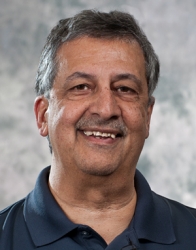
His award winning columns can be found at www.HANANIA.COM Subscribe FREE today
Hanania also writes about Middle East issues for the Arab News, and The Arab Daily News criticizing government policies in the Israeli-Palestinian conflict.
Hanania was named "Best Ethnic American Columnist" by the New America Media in November 2007, and is the 2009 recipient of the SPJ National Sigma Delta Chi Award for column writing.
Email Ray Hanania at [email protected].
Follow RayHanania at Twitter
- CUB urges State Regulators to lower Peoples Gas rate hike of $66 million - October 7, 2026
- Lipinski and Hanania analyze MidTerm elections, and Congressional battle between Patty Garcia and Chris Getty in Video Podcast - October 7, 2026
- Orland Park Police Department announces enforcement results - October 7, 2026